The Town That Vanished: Michel Natal and the Walls That Would Not Fall
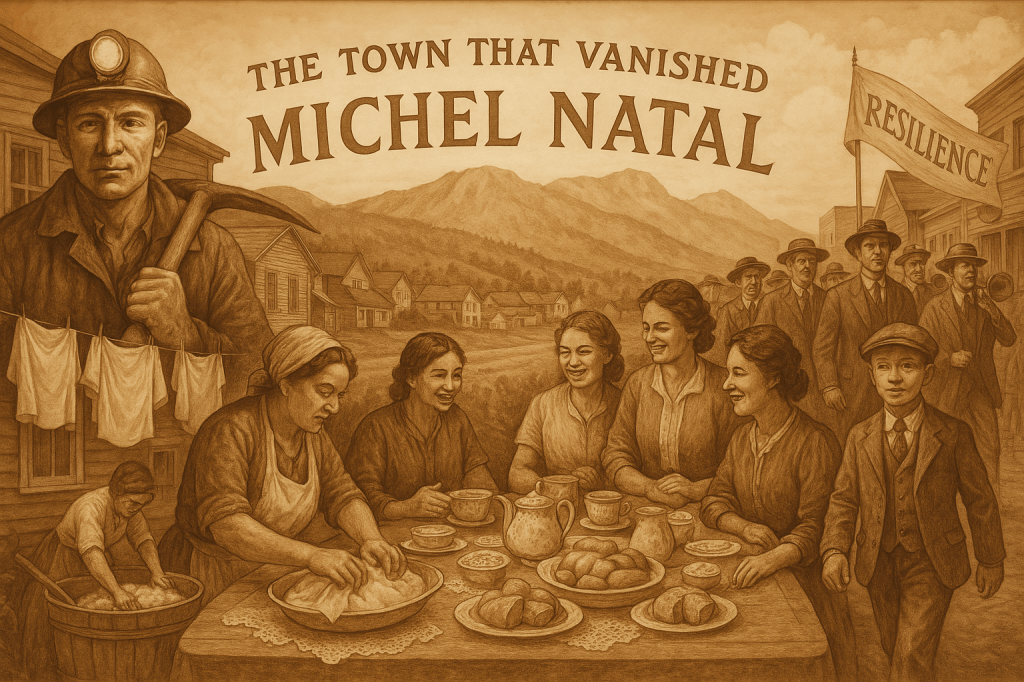
Beneath the towering peaks of the Rockies, deep in the belly of the earth, the men of Michel Natal toiled in darkness. Michel Natal was more than a coal town—it was a world built by hands that toiled in darkness and hearts that found light in each other. Their hands, thick with callouses, gripped picks and shovels, carving into the black veins of coal that powered a growing country. Lanterns swung from their helmets, casting flickering light on faces lined with soot and sweat. They worked side by side—Italians, Ukrainians, Scots, Chinese, Poles—each man speaking in the language of labor, bound together in the dust-filled tunnels beneath their town. Three towns, side by side, carved from coal and built with the hands of those who had traveled across the ocean in search of a new life. It was a place where men toiled deep beneath the earth, where women scrubbed coal-stained shirts until they gleamed white on the line, and where kitchens overflowed with laughter and the rich, warm scents of a hundred different homelands.
Underground, men carved through rock and dust, lungs filled with the weight of the earth. They descended into the earth, swallowed by darkness, their hands thick with callouses, their breath heavy with dust. Down there, in the belly of the mountain, they carved out the wealth of a nation—brick by brick, shovel by shovel—paying for progress with their bodies. They emerged at dusk, faces blackened with coal, eyes tired but alive.
Above ground, the women carried their own kind of strength. The shirts and socks scrubbed so white they shone like flags on the line were proof of their labor. Their arms ached from wringing out the black water, yet their homes gleamed with pride. Above the men, life carried on in the rhythms of resilience.
The women carried a different weight. They scrubbed the coal from their husband’s shirts, their sons’ trousers, that hung heavy on the lines, streaked with black despite the strongest soap. Their hands were red from lye and cold water, from wringing out the history of the mines with every wash and the lives of men lost. Yet, it was in those backyards and clotheslines that life bloomed—children played under skies tinged with coal smoke, and neighbors swapped stories, food, and laughter across the lilac filled fences. White linens snapped in the wind like flags of defiance, a testament to the work they did to keep their families whole. Their homes, were filled with beauty—delicate doilies stretched across worn wooden tables, steaming dishes placed on lace runners hand-crocheted during long winters. In Michel Natal, a family was not just blood, but the people who lived next door, who helped hang the wash, who shoveled the snow from your steps without asking. Here, Italian, Ukrainian, Scottish, Polish, and Chinese hands broke bread together, speaking in the language of hard work, hope, and home.
Michel Natal was not just a mining town, it was a community, a parade stitched together by the resilience of those who had come from across the ocean in search of a future. On Sundays, the men who worked underground by week donned their finest, their wives in dresses pressed crisp despite the ever-present dust. The streets filled with the sounds of parades—marching bands, banners waving, children running between their parents’ legs, and the echoes of folk songs from a dozen homelands blending into one. The smell of bread, freshly baked the lingering perfume in every home.
Tables stretched long, heaped with food from every corner of the world. Perogies sat beside pasta, shortbread shared space with fresh-baked bread, sauerkraut nestled next to steaming bowls of stew and bowls of borscht dyed red like the sunsets over the mountains. The languages mixed as easily as the recipes, the laughter of children weaving through the warm air scented with roasted meat and sweet pastries.
On Sundays, after the church bells rang, the streets came alive. Women in their finest dresses, men with polished boots, and children with ribbons in their hair marched in parades that celebrated not just a town, but a shared resilience. Accordions and violins played melodies from the old countries, while young boys raced ahead, carrying flags of nations that had found new roots in the coal-rich soil. Life carried on in the continual rhythms of resilience.
Until, one day, the government came with a different kind of progress.
But progress came like a wrecking ball. The government and the mines decided the town was an eyesore, a forgotten remnant of industry. Tourism and development demanded something cleaner, something newer. Michel Natal had too much history—a history of struggle, of soot-covered men and women who built a life from nothing. The decision was made: the town would be erased.
The government called it unsightly, the developers wanted something cleaner, tourism needed something new. The orders came down, and the houses were chalked with giant marks, an x for go and an O to stay. No money paid, the homes were torn away, the streets emptied, the history wiped like coal dirt falling from a miner’s hands. Michel Natal, they said, was an eyesore. Too industrial, too rugged, too much a reminder of a past they wanted to erase. The people were told to pack up, to move on. One by one, homes were emptied. The doilies were folded away, the tables cleared. The laughter faded as walls that had stood for generations were torn down in the name of modern change. The red row of houses fell one by one. The stores and banks and the giant school, made by masters hands. The music and voices piled silently into the rubbles left behind. The bulldozers and the man won.
Brick by brick, house by house, Michel Natal was torn from the earth like the very coal it had provided. The streets where immigrants had built their dreams turned to dust. The echoes of laughter, the clang of hammers on steel, the hum of sewing machines repairing worn-out work clothes—all of it disappeared. But the stories refused to die.
One child who had witnessed the vanishing of Michel Natal was Michelle Loughery. She had watched the town’s life reduced to rubble, its history discarded as if it had never existed. But she carried the memory like a burning coal in her hands, unwilling to let it fade into the same dust that had once covered her father’s boots and his coal dust tattooed hands, thickened like ropes as he curled his fingers as he played his songs, slightly shamed by the black lingering smell of coal.
She watched it happen, standing silently, her knees scarred with lines of coal dust she had won in run sheep run games. She saw the houses where tea had been poured and stories had been told reduced to rubble. She saw the parades disappear, the laughter become a whisper. And she carried that loss with her, unwilling to let it vanish like a thread barely connecting to lives gone.
The pride of work lays forever at her feet. The pride of people that saw you and shared a dream. Of a community and a home and a sense of place. The dozers came and the walls fell down. The people cried and the world changed. As she grew, she found a way to rebuild—not in stone or brick, but with paint and a parade.
She painted the lost stories onto walls, turning blank spaces into voices that could not be silenced. She created a way to make a living history project where no bulldozer, no developer, no politician could erase the past. Her murals stretched across cities and towns, telling the tales of miners who dug deep, of women who washed the coal from their families’ lives, of immigrants who built the roads, the railways, and the homes that others now claimed.
Developers had torn down Michel Natal, but they could not tear down the truth. The walls they sought to erase were rebuilt in sooty stories of resilience and time—not in bricks, but in paint, in the hands of a woman who refused to let history be forgotten.
A young girl watched as her town was taken apart piece by piece, her family’s history reduced to rubble, its stories discarded like coal dust shaken from a miner’s coat. Michelle Loughery was just a child when Michel Natal was erased, but she carried the weight of its loss with her—the echoes of voices that refused to be silenced, the memories of hands that had built something out of nothing.
She picked up a brush..
Michel Natal may have disappeared from the land, but it did not disappear from time. It’s stories hang in the paint of every wall Michelle Loughery has touched. The stories and voices rise in the wind through the murals that refuse to fade. And when people pass by and ask, “Who were they?” the walls answer back. Through murals, she painted the miners back into the streets, the women back into their kitchens, the doilies and dresses and parades back into existence. She made walls speak, so that no bulldozer could silence them again. She emulated the way the people worked together to rebuild, a wayfinder community model, a living legacy where the lost towns, the erased people, the forgotten histories could never be buried.
She took the stories of the lost towns, the forgotten workers, the women who had scrubbed their lives into the fabric of the earth, and she put them back on the walls where no one could tear them down again. She painted the miners who carved tunnels into mountains, the mothers who wrung coal from their husbands’ shirts, the children who ran through the streets while parades of immigrants marched behind them.
And so, she rebuilt. Not with brick, but with paint and memories and tall scaffolding. With youth and elders, not with picks and shovels, but with brushes and paint.
Through her eyes and hands, so like her mothers, she stitched history back into the places that had tried to forget. Developers may have knocked Michel Natal down, but they could not erase its soul. Chantilly Lace wedding pictures left hanging on the clothes lines torn down. The lives in Kodachrome line up in connected lines to a past never forgotten.
Because the walls they destroyed were rebuilt in the black sooty stories of resilience and time.
Because the town they buried still stands in the mind of time.
In paint, on walls, in places they tried to erase.
In memories hanging on the lines of colours in her mind.
And in the hearts of those who refuse to let history be forgotten.
She picks up her brush.
as more walls come tumbling down.. to be continued

 ARTIST MICHELLE LOUGHERY
Leave a reply to Bob & Lorrie Cancel reply